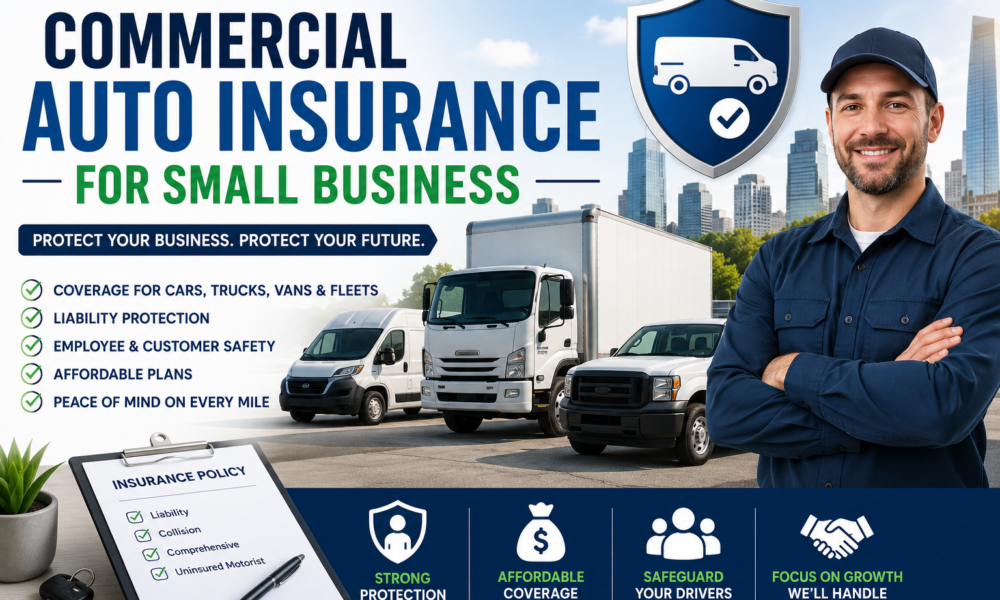
Whether you own a delivery company, construction business, cleaning service, landscaping operation, consulting firm, or mobile repair business, vehicles play a critical role in your daily operations. A single accident involving a company vehicle can result in costly repairs, medical expenses, legal claims, and business interruptions. That’s why commercial auto insurance for small business is one of the most important investments a business owner can make.
Many entrepreneurs mistakenly believe that their personal auto insurance policy will cover business-related driving. In reality, personal auto insurance often excludes business use, leaving owners exposed to significant financial risk.
Commercial auto insurance is specifically designed to protect businesses that own, lease, rent, or regularly use vehicles for work purposes. The right policy can help safeguard your business assets, employees, reputation, and long-term financial stability.
This guide explains everything small business owners need to know about commercial auto insurance, including coverage options, costs, benefits, and ways to reduce premiums.
What Is Commercial Auto Insurance?
Commercial auto insurance is a specialized insurance policy that provides financial protection for vehicles used for business purposes.
Unlike personal auto insurance, commercial coverage addresses the unique risks businesses face when employees or owners operate vehicles for work-related activities.
Covered vehicles may include:
- Company cars
- Pickup trucks
- Cargo vans
- Delivery vehicles
- Service trucks
- Utility vehicles
- Food trucks
- Fleet vehicles
Businesses of all sizes can benefit from commercial auto insurance coverage.
Why Small Businesses Need Commercial Auto Insurance
Many business owners underestimate the financial consequences of vehicle-related accidents.
Commercial auto insurance helps protect businesses from:
Expensive Vehicle Repairs
Even minor accidents can lead to costly repair bills.
Medical Expenses
Injuries resulting from accidents can generate significant healthcare costs.
Legal Liability
Businesses may face lawsuits if they are found responsible for injuries or property damage.
Business Interruption
Vehicle downtime can delay services, deliveries, and customer commitments.
Asset Protection
Insurance helps prevent major losses from impacting business finances.
Without adequate coverage, a single accident could seriously affect a company’s profitability.
What Does Commercial Auto Insurance Cover?
Liability Coverage
Liability coverage is the foundation of most commercial auto policies.
It may help pay for:
- Property damage
- Bodily injury claims
- Legal defense expenses
- Court settlements
If a company driver causes an accident, liability coverage can help protect the business financially.
Collision Coverage
Collision insurance helps pay for repairs to company vehicles damaged in accidents.
Covered situations may include:
- Vehicle collisions
- Rollovers
- Single-vehicle accidents
- Impact with objects
Collision coverage can reduce unexpected repair costs.
Comprehensive Coverage
Comprehensive insurance protects against non-collision incidents.
Examples include:
- Theft
- Vandalism
- Fire damage
- Storm damage
- Hail damage
- Falling objects
This coverage provides valuable protection for business vehicles exposed to various risks.
Uninsured and Underinsured Motorist Coverage
Not every driver carries adequate insurance.
This coverage helps protect your business if an at-fault driver:
- Has no insurance
- Has insufficient coverage
Medical bills and repair expenses may be covered depending on policy terms.
Medical Payments Coverage
Medical payments coverage may help pay for healthcare expenses following an accident.
Covered individuals may include:
- Drivers
- Employees
- Passengers
This coverage can assist regardless of fault in many situations.
Businesses That Need Commercial Auto Insurance
Many industries rely on commercial vehicles.
Examples include:
Contractors
- Electricians
- Plumbers
- HVAC technicians
- Roofers
Delivery Services
- Local delivery companies
- Courier businesses
- Food delivery operations
Service Businesses
- Cleaning companies
- Pest control providers
- Mobile repair technicians
Construction Companies
Construction businesses frequently transport equipment, materials, and employees.
Real Estate Professionals
Agents who regularly drive clients may benefit from commercial coverage.
If a vehicle is used primarily for business activities, commercial auto insurance is often recommended.
Factors That Affect Commercial Auto Insurance Costs
Insurance premiums vary from one business to another.
Several factors influence pricing.
Type of Business
Higher-risk industries generally pay higher premiums.
Businesses involving frequent driving may face increased costs.
Number of Vehicles
Larger fleets often require higher overall premiums.
However, some insurers provide fleet discounts.
Driving Records
Drivers with clean records generally qualify for lower rates.
Accidents and traffic violations may increase premiums.
Vehicle Type
Insurance costs vary based on:
- Vehicle size
- Vehicle value
- Vehicle usage
- Repair expenses
Luxury or specialized vehicles often cost more to insure.
Coverage Limits
Higher liability limits typically result in higher premiums.
However, increased protection may be worth the additional cost.
Geographic Location
Businesses operating in congested urban areas may experience higher insurance rates due to increased accident risk.
Benefits of Commercial Auto Insurance
Financial Protection
Insurance helps reduce unexpected financial losses.
Professional Credibility
Clients often prefer working with insured businesses.
Legal Compliance
Many states require minimum commercial auto insurance coverage.
Employee Protection
Coverage can help safeguard employees while operating company vehicles.
Business Continuity
Insurance helps businesses recover faster after accidents.
How Small Businesses Can Lower Insurance Costs
Hire Safe Drivers
Maintaining strict hiring standards can reduce accident risk.
Review:
- Driving records
- License status
- Accident history
before hiring drivers.
Increase Deductibles
Higher deductibles generally reduce monthly premiums.
Businesses should choose deductibles they can comfortably afford.
Bundle Insurance Policies
Many insurers offer discounts when businesses combine:
- Commercial auto insurance
- General liability insurance
- Business owner’s policies
Bundling may generate substantial savings.
Implement Driver Safety Programs
Training employees on safe driving practices may reduce accidents and insurance costs.
Use Vehicle Tracking Technology
GPS tracking and telematics systems help monitor driver behavior and improve safety.
Many insurers reward businesses that implement risk-reduction measures.
Common Mistakes Business Owners Make
Relying on Personal Auto Insurance
Personal policies often exclude business use.
This mistake can create significant coverage gaps.
Choosing Minimum Coverage Limits
Minimum limits may not adequately protect business assets after a serious accident.
Failing to Review Policies Annually
Business operations change over time.
Annual reviews help ensure appropriate coverage and competitive pricing.
Not Adding New Vehicles Promptly
Every company vehicle should be added to the policy immediately.
Delays can create coverage issues.
Frequently Asked Questions
Is commercial auto insurance required for small businesses?
Requirements vary by state, but businesses that own or regularly use vehicles for work purposes typically need commercial auto coverage.
Can employees drive insured company vehicles?
Yes. Employees can often be covered when operating company vehicles for authorized business purposes.
Does commercial auto insurance cover personal use?
Some policies provide limited personal-use coverage, but policy details vary by insurer.
How much commercial auto insurance should a small business carry?
Coverage needs depend on business size, vehicle value, industry risks, and potential liability exposure.
Conclusion
Commercial auto insurance for small business is more than just a legal requirement—it is an essential safeguard against financial losses that could threaten your company’s future. Whether you operate a single service van or manage an entire fleet, the right policy helps protect your vehicles, employees, customers, and business assets.
By comparing quotes, selecting appropriate coverage limits, maintaining safe driving practices, and reviewing policies regularly, small business owners can secure reliable protection while controlling insurance costs.
Investing in commercial auto insurance today can help ensure your business remains protected, professional, and prepared for whatever the road brings tomorrow.
Leave a Reply