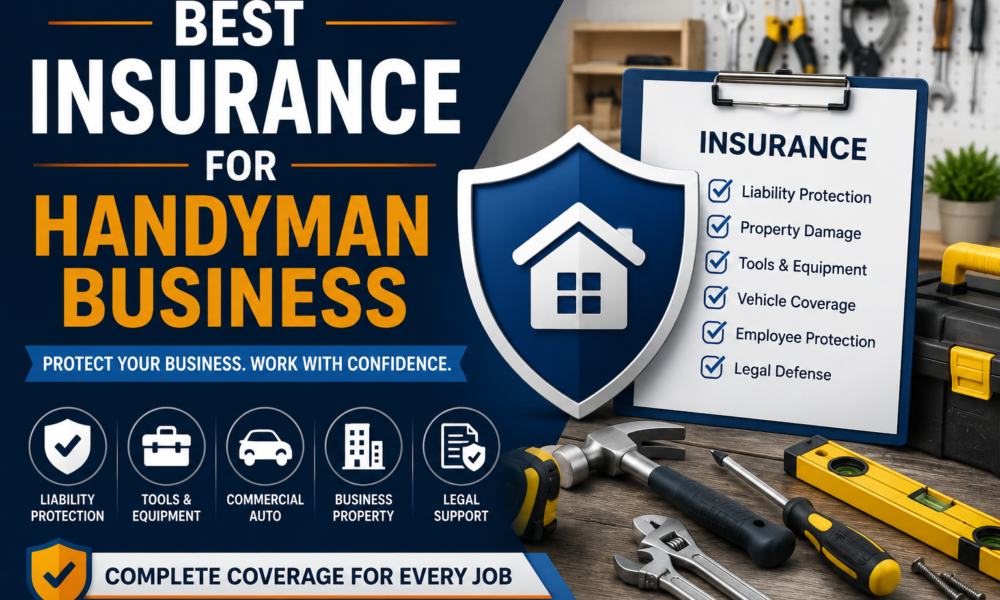
Running a handyman business can be rewarding and profitable, but it also comes with risks. Whether you’re repairing drywall, installing fixtures, assembling furniture, painting interiors, or handling general maintenance tasks, accidents can happen at any time. A damaged customer’s property, an injured client, stolen tools, or a vehicle accident could cost thousands of dollars and potentially threaten the future of your business.
That’s why finding the best insurance for a handyman business is essential. The right insurance policy not only protects your finances but also builds trust with customers who want to hire a licensed and insured professional.
In this guide, you’ll learn everything about handyman insurance, including the types of coverage available, average costs, factors affecting premiums, and how to choose the best protection for your business.
Why Handyman Businesses Need Insurance
Many handyman professionals operate as sole proprietors or small business owners. While this keeps overhead low, it also means the business owner is often personally responsible for damages and liabilities.
Without insurance, you may be responsible for:
- Property damage claims
- Customer injuries
- Legal expenses
- Tool replacement costs
- Vehicle accidents
- Employee injuries
- Contract disputes
Even a small mistake can lead to expensive lawsuits and financial losses.
Insurance provides a safety net that allows you to focus on growing your business with confidence.
What Is Handyman Insurance?
Handyman insurance is not a single policy. Instead, it is a combination of insurance coverages designed to protect contractors and maintenance professionals from common business risks.
Coverage can be customized based on:
- Business size
- Services offered
- Number of employees
- Equipment value
- Vehicle usage
- State requirements
Most successful handyman businesses carry several types of insurance to ensure complete protection.
General Liability Insurance
The Most Important Coverage for Handyman Businesses
General liability insurance is often considered the foundation of handyman business protection.
It may help cover:
- Property damage
- Bodily injury claims
- Legal defense costs
- Settlement expenses
- Customer accidents
Example
While installing shelving in a client’s home, you accidentally damage an expensive marble countertop.
General liability insurance may help pay for repairs or replacement costs.
Many commercial clients require proof of general liability insurance before awarding contracts.
Commercial Property Insurance
If you own a workshop, office, storage facility, or inventory, commercial property insurance can help protect business assets.
Coverage may include:
- Tools
- Equipment
- Inventory
- Furniture
- Office electronics
- Storage units
Unexpected events such as fire, theft, or vandalism can result in significant losses.
Tools and Equipment Insurance
Tools are the lifeblood of a handyman business.
Without them, work stops immediately.
Tools and equipment insurance may help cover:
- Stolen tools
- Damaged equipment
- Lost machinery
- Portable work equipment
This coverage is particularly important for professionals who transport expensive tools to job sites daily.
Commercial Auto Insurance
Many handyman businesses rely on trucks, vans, or work vehicles.
Personal auto insurance often excludes business-related activities.
Commercial auto insurance may cover:
- Vehicle accidents
- Property damage
- Medical expenses
- Liability claims
- Vehicle repairs
Whether you operate one van or multiple vehicles, commercial auto coverage is essential.
Workers’ Compensation Insurance
If you have employees, workers’ compensation insurance may be required by state law.
Coverage can help pay for:
- Medical expenses
- Lost wages
- Rehabilitation costs
- Workplace injury claims
Handyman work often involves ladders, power tools, electrical systems, and heavy lifting, making injury protection extremely important.
Professional Liability Insurance
Also known as Errors and Omissions (E&O) Insurance.
This coverage may protect your business if a client claims:
- Negligence
- Mistakes
- Incomplete work
- Poor workmanship
- Financial losses due to services provided
Even if claims are unfounded, legal defense costs can be expensive.
Business Owner’s Policy (BOP)
A Business Owner’s Policy combines multiple coverages into one package.
Typically includes:
- General liability insurance
- Commercial property insurance
Benefits include:
- Lower premiums
- Simplified policy management
- Comprehensive protection
Many small handyman businesses choose a BOP because it provides excellent value.
How Much Does Handyman Insurance Cost?
Insurance costs vary depending on several factors.
Pricing is influenced by:
Business Location
Different states have different insurance risks and legal environments.
Annual Revenue
Higher revenue often means greater exposure to risk.
Number of Employees
Businesses with employees generally pay more than solo operators.
Services Offered
Higher-risk services may increase premiums.
Examples include:
- Roofing
- Electrical work
- Structural repairs
Claims History
Businesses with previous claims may face higher insurance costs.
Factors That Affect Insurance Rates
Insurance providers evaluate multiple factors before providing quotes.
Years of Experience
Experienced professionals often receive better rates.
Safety Practices
Strong safety procedures may reduce premiums.
Coverage Limits
Higher coverage limits usually result in higher premiums.
Equipment Value
Businesses with expensive tools and machinery may require additional protection.
Vehicle Usage
Frequent driving can increase commercial auto insurance costs.
How to Find the Best Insurance for a Handyman Business
Compare Multiple Quotes
Never purchase the first policy you receive.
Compare:
- Coverage limits
- Exclusions
- Deductibles
- Premium costs
Different providers often offer significantly different pricing.
Understand Your Risks
A handyman performing light maintenance has different insurance needs than someone handling electrical or plumbing projects.
Choose coverage based on actual risks
Consider Future Growth
Select policies that can scale as your business expands.
Adding employees or vehicles later should be simple.
Verify Client Requirements
Some commercial contracts require specific insurance limits.
Review client requirements before purchasing coverage.
Common Insurance Mistakes Handyman Businesses Make
Relying on Personal Insurance
Personal policies rarely provide adequate business protection.
Buying Only Minimum Coverage
The cheapest policy may leave important risks uncovered.
Ignoring Tool Coverage
Replacing stolen tools out-of-pocket can be costly.
Not Reviewing Policies Annually
Business needs change over time.
Annual reviews ensure coverage remains appropriate.
Benefits of Being Fully Insured
Increased Customer Trust
Clients often prefer insured professionals.
More Business Opportunities
Many commercial contracts require proof of insurance.
Financial Protection
Insurance helps reduce unexpected losses.
Legal Protection
Coverage may assist with defense costs and settlements.
Peace of Mind
You can focus on serving customers instead of worrying about potential risks.
Frequently Asked Questions
What insurance does a handyman need?
Most handyman businesses benefit from:
- General liability insurance
- Commercial auto insurance
- Tools and equipment coverage
- Workers’ compensation (if employees are present)
Is handyman insurance required?
Requirements vary by state and business structure. Some clients and contracts may require proof of insurance.
Can a handyman get insurance without employees?
Yes. Many solo handyman professionals carry insurance to protect themselves and their businesses.
How much liability insurance should a handyman carry?
Coverage needs vary, but many businesses choose limits that adequately protect business assets and meet client requirements.
Leave a Reply